Captured by the Committed: When Grassroots Pressure Forces Candidates Into Electoral Corners
The Arena Shifts Before the Main Event
Long before a general election ballot is printed, a quieter and arguably more consequential contest is already underway. In living rooms, union halls, college campuses, and digital organizing channels, committed activists are exerting pressure on candidates with a precision that traditional party infrastructure rarely achieved. The result, visible across multiple recent election cycles, is a growing number of candidates who arrive at general elections carrying positions they may not have chosen freely — positions that polling routinely flags as liabilities with the broader electorate.
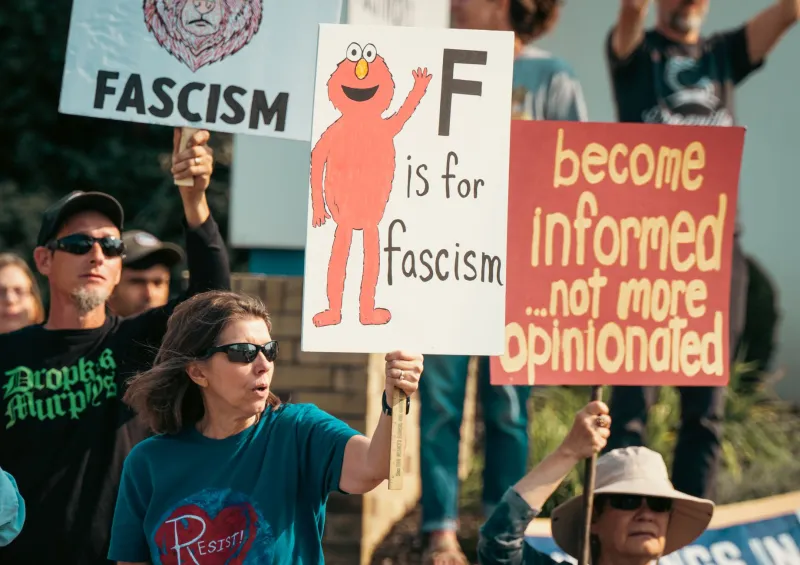
This is the protest primary in practice: not merely a challenge from the left or the right, but a structural phenomenon in which organized intensity routinely outweighs passive preference. Understanding it requires moving past the familiar complaint that "extremists have taken over" and examining the actual mechanics by which grassroots movements convert enthusiasm into candidate behavior.
How Organized Minorities Move the Needle
The core dynamic is straightforward, even if its consequences are complex. Primary electorates are small, self-selected, and disproportionately composed of high-engagement partisans. Turnout in competitive congressional primaries frequently falls below twenty percent of registered party members. Within that already narrow pool, an organized bloc of even a few thousand voters — or, in smaller districts, a few hundred — can determine an outcome entirely.
Grassroots movements have grown adept at exploiting this arithmetic. The progressive "uncommitted" campaign that drew unexpected support in the 2024 Democratic presidential primaries across states including Michigan and Minnesota demonstrated that coordinated abstention could function as a form of political leverage, generating national headlines and forcing internal party conversations that a dispersed collection of individual dissatisfied voters never could. Similarly, on the Republican side, primary challenges mounted by aligned activist networks have repeatedly forced incumbents to recalibrate positions on issues ranging from immigration enforcement to election integrity — not because polling demanded it, but because organized primary pressure made the political cost of resistance too high.
The mechanism is not mysterious. Candidates and their consultants read the same turnout models everyone else does. When a credible activist network signals that it can move primary votes, rational candidates respond.
The Electoral Liability Question
Where the debate becomes genuinely complicated is in assessing what happens next. Critics of this dynamic — and they exist across the ideological spectrum — argue that positions extracted through primary pressure frequently become anchors in general elections. The logic is intuitive: a candidate who pledges, under activist pressure, to support a policy that polls at thirty-eight percent nationally has effectively handed opponents a durable line of attack.
The historical record offers partial support for this concern. Candidates who survived contested primaries by adopting positions at the ideological margins of their party have, in several high-profile cases, underperformed in general elections against opponents who were, on paper, weaker. The 2022 cycle produced notable examples in Senate races where nominees emerged from primaries having made commitments that proved difficult to contextualize for a general audience.
Yet the counterargument deserves equal weight. Polling on specific policy positions is a notoriously imprecise guide to electoral behavior. Voters routinely support candidates whose stated positions diverge from their own preferences, particularly when party identification, candidate quality, and economic conditions dominate the decision calculus. The assumption that a single extracted position will determine a general election outcome is, in many cases, an oversimplification that flatters the precision of political science more than the evidence warrants.
Authentic Participation or Minority Capture?
The deeper normative question — one that PolitArena readers across the ideological spectrum have good reason to engage seriously — is whether this dynamic represents democracy functioning well or functioning poorly.
Defenders of grassroots primary pressure make a principled case. Political parties are, in theory, coalitions that should be responsive to their most engaged members. If activists who donate time, money, and organizational capacity to a party cannot shape its candidates' positions, then the relationship between participation and influence has broken down in a meaningful way. The alternative — candidates who triangulate entirely toward median general-election voters, ignoring their base — is not obviously more democratic. It is simply responsive to a different constituency.
Critics counter that the median primary voter and the median general-election voter are not the same person, and that pretending otherwise produces candidates who are genuinely misaligned with the preferences of the electorate they seek to represent. When a candidate adopts a position under activist pressure that conflicts with the views of sixty percent of the general electorate, the question of democratic legitimacy becomes genuinely uncomfortable. Responsive to whom, exactly?
There is also a geographic dimension that complicates any clean resolution. A position that carries real electoral risk in a competitive suburban congressional district may be entirely viable — or even advantageous — in a safe urban or rural seat. Grassroots movements that operate nationally often apply pressure without adequate sensitivity to local electoral conditions, effectively imposing a uniform ideological template on candidates whose districts demand differentiated strategies.
What Campaigns Are Actually Doing About It
Candidates and their teams have not been passive observers of this dynamic. Several adaptations have become increasingly common. Some campaigns have adopted a deliberate posture of early engagement with activist networks — attempting to shape the terms of grassroots pressure before it crystallizes into a public demand, rather than responding reactively. Others have developed more sophisticated language strategies, adopting the framing of activist demands while preserving enough interpretive flexibility to moderate in the general election without appearing to have reversed course.
The latter approach carries its own risks. Activists are not naive, and movements that feel they have been managed rather than genuinely heard tend to respond accordingly — either by withdrawing enthusiasm during the general campaign or by escalating pressure during the next primary cycle.
The Question the Arena Keeps Asking
What the protest primary ultimately reveals is a tension that has always been latent in American electoral design but has become impossible to ignore: the rules that determine who wins a primary and the rules that determine who wins a general election are not the same rules, and the candidates caught between them must make consequential choices with imperfect information.
Whether that tension is a flaw to be corrected — through primary reform, ranked-choice voting, or changes to party rules — or simply the productive friction of a competitive democracy is a question without a clean answer. What is clear is that grassroots movements have become sophisticated enough to force it into the open, election cycle after election cycle, regardless of whether the broader electorate has been consulted.
In an arena where ideas compete, that forcing function is not without value — even when the positions it produces make the general election considerably harder to win.