The Vanishing Center: How American Politics Purged Its Own Moderates

Photo: empty congressional chamber divided aisle United States Capitol, via i.pinimg.com
There was a time, not so distant in historical terms, when the most admired figures in American politics were those who could reach across the aisle. Dealmakers. Bridge-builders. Politicians who treated compromise not as capitulation but as craft. Today, that archetype has been largely expelled from viable electoral pathways—not by voter demand alone, but by a confluence of institutional mechanics, financial incentives, and media architecture that systematically rewards confrontation over conciliation.
The question worth asking at PolitArena, where competing ideas are supposed to find resolution through reasoned debate, is this: Did polarization eliminate the moderate, or did the elimination of moderates accelerate polarization? The answer, frustratingly, appears to be both.
The Primary Problem
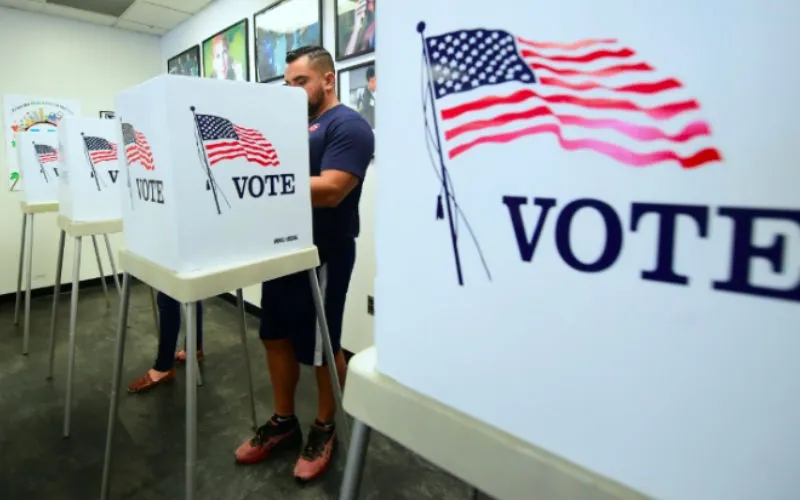
To understand how moderates disappeared, one must first understand the machinery of primary elections. In most states, primary contests draw a narrow, ideologically motivated electorate. Turnout in primaries routinely hovers between 15 and 25 percent of registered voters, meaning that the pool selecting nominees skews sharply toward party activists—those with the strongest ideological commitments and the least appetite for compromise.
The incentive structure this creates is almost perfectly designed to punish moderation. A Republican who signals willingness to negotiate on tax policy, or a Democrat who expresses reservations about a flagship progressive priority, hands their primary opponents a ready-made attack line. In the compressed, high-stakes environment of a primary campaign, nuance is a liability.
Closed primary systems—where only registered party members may vote—intensify this dynamic considerably. States like New York, Pennsylvania, and Florida restrict their primaries to enrolled partisans, effectively locking out the independent voters who might otherwise pull nominees toward the center. Even in states with open or semi-open primaries, the organizational advantages held by ideological base voters tend to dominate.
Case Studies in Centrist Collapse
The biographical record of recent American politics is littered with cautionary examples. Consider the trajectory of figures like Senator Richard Lugar of Indiana, a six-term Republican who had earned a national reputation for foreign policy expertise and bipartisan credibility. In 2012, Lugar lost his primary to a Tea Party challenger by more than 20 percentage points. His offense, in the eyes of primary voters, was precisely his record of working across party lines.
Similarly, Representative Mike Castle of Delaware—a moderate Republican who had won statewide office repeatedly in a purple state—was defeated in a 2010 Senate primary by a candidate who subsequently lost the general election to a Democrat. The party, in effect, chose ideological purity over electoral viability.
On the Democratic side, the story rhymes if not repeats. Senator Joe Lieberman of Connecticut, once his party's vice-presidential nominee, was defeated in the 2006 Democratic primary by a candidate running explicitly against his support for the Iraq War. Lieberman survived by running as an independent in the general election—but his experience illustrated the same structural reality: the primary electorate had grown intolerant of deviation.
These are not isolated anecdotes. They represent a pattern confirmed by political scientists including those at the Pew Research Center, whose long-term studies have documented the steady ideological sorting of both parties' primary electorates over the past three decades.
How Media Fragmentation Closed the Door
If the primary system created the incentive to abandon moderation, media fragmentation provided the enforcement mechanism. The collapse of a shared national media environment—accelerated by the rise of partisan cable news in the 1990s and social media platforms in the 2010s—meant that politicians no longer needed to appeal to a broad, ideologically diverse audience. They needed to appeal to a base that was already consuming a curated information diet reinforcing its existing beliefs.
This transformation altered not just how politicians communicated, but what they communicated. Outrage, confrontation, and ideological clarity generate engagement. Careful hedging, bipartisan acknowledgment, and policy nuance do not trend. A senator who brokers a quiet compromise on infrastructure funding generates far less media coverage than one who delivers a scorching floor speech attacking the opposing party.
The financial dimensions of this dynamic compound the problem. Small-dollar online fundraising, which has become an increasingly important revenue stream for campaigns, is driven heavily by emotional intensity. Candidates who traffic in conflict and grievance tend to outperform those who emphasize cooperation when it comes to grassroots digital fundraising—creating yet another structural disincentive for moderation.
Cause, Symptom, or Both?
Political scientists remain genuinely divided on the causal sequence. One school of thought holds that elite polarization—the ideological sorting of elected officials—preceded and drove mass polarization among ordinary voters. Politicians moved to the extremes, and voters followed their cues. On this reading, the disappearance of moderate politicians is a cause of the broader polarization crisis.
An alternative view suggests that shifts in public opinion, driven by deeper social and cultural changes—including geographic sorting, educational realignment, and the decline of cross-cutting social institutions—created the conditions under which moderate politicians became unelectable. The politicians simply responded rationally to a changed electoral environment.
The most persuasive synthesis recognizes a feedback loop: structural changes in primaries and media created initial incentives for polarization among elites, which then reshaped voter expectations, which in turn made it even harder for moderates to survive, reinforcing the original dynamic. Once the loop is established, it becomes self-sustaining.
Is There a Path Back?
Reform proposals exist, and some have gained genuine traction. Ranked-choice voting, which allows voters to express ordered preferences rather than a single binary choice, has been adopted in Alaska and Maine for statewide races, with proponents arguing it reduces the spoiler dynamic and creates incentives for candidates to appeal beyond their ideological base. Alaska's 2022 special congressional election—won by a moderate Republican in a field that included a more conservative challenger—offered at least preliminary evidence for this theory.
Top-two or "jungle" primary systems, used in California and Washington State, place all candidates on a single primary ballot regardless of party affiliation, with the top two vote-getters advancing to the general election. This structure can, under certain conditions, produce general election contests between candidates of the same party—or between candidates who have incentives to appeal to a broader coalition.
None of these reforms are panaceas. Critics note that California's top-two system has not dramatically moderated the state's legislature, and that structural changes alone cannot override deeply held ideological commitments.
What Moderation Actually Requires
Perhaps the most honest observation is that the return of genuine political moderation—the kind capable of producing durable legislative compromise—requires more than procedural fixes. It requires a political culture that rewards patience, acknowledges complexity, and treats the opposition as a legitimate participant in democratic governance rather than an existential threat to be defeated.
Building that culture is a longer project than any single election cycle can accomplish. But recognizing that the disappearance of the political center was not inevitable—that it resulted from specific, identifiable structural choices—is at minimum the beginning of a more honest conversation about how to restore it.
In an arena where ideas compete, the absence of a viable center does not mean that centrist ideas have lost the argument. It may mean that the arena itself has been redesigned to prevent them from competing at all.