Off the Radar: The States, Districts, and Voter Shifts That Could Rewrite the 2024 Electoral Map
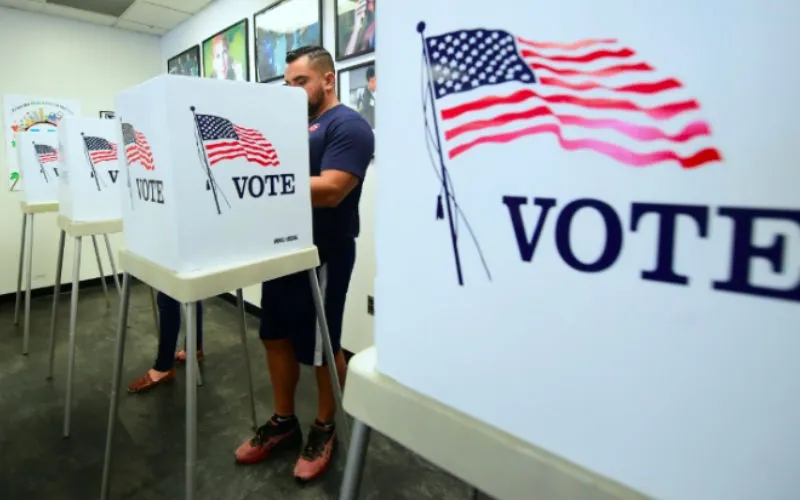
Photo: US electoral map 2024 state voting districts political campaign strategy, via media.freemalaysiatoday.com
Why the Conventional Map Keeps Getting It Wrong
Every four years, the American political press draws the same rough map. A cluster of states gets labeled "battleground," another cluster gets written off as safely partisan, and the rest of the country is essentially declared irrelevant before a single general election ballot is cast. This framework is not without logic—historical voting patterns carry real predictive weight—but it has a persistent blind spot: it treats electoral coalitions as stable when they are, in fact, constantly in motion.
The 2024 cycle is producing exactly the kind of structural churn that conventional polling aggregates are poorly equipped to capture. Coalition shifts among working-class voters, unexpected primary momentum in districts that rarely attract national attention, and hyperlocal policy controversies that never surface in national coverage are already reshaping competitive landscapes across the country. What follows is a contrarian framework for understanding where the genuine action is—and why it matters for how citizens engage with this election.
The Sunbelt's Unresolved Question
Arizona and Georgia have received their share of attention since their dramatic shifts in 2020, but the more instructive story in the Sunbelt may be happening at the sub-state level. In both states, the suburban realignment that powered Democratic gains in the last presidential cycle is encountering a counterpressure: cost-of-living concerns, rapid population growth from domestic migration, and a new wave of voters who relocated from traditionally Republican states and brought their political preferences with them.
Phoenix's outer ring suburbs—Maricopa County precincts that swung toward Biden in 2020—have seen significant in-migration from California, Texas, and the Midwest. The political composition of that migration is not uniform, and local registration data suggests a more competitive environment than statewide polling currently reflects. Meanwhile, Georgia's exurban counties, which were already trending competitive, are experiencing their own demographic shifts driven by industrial expansion along the I-85 corridor. These are not national stories yet, but they carry genuine electoral weight.
North Carolina, meanwhile, is perhaps the most persistently underrated competitive state in the country. It has narrowly favored Republican presidential candidates in recent cycles while simultaneously electing Democratic governors and producing competitive Senate races. The structural tension between its urban centers—Charlotte, the Research Triangle, Asheville—and its rural and small-city constituencies has not resolved. If anything, it has intensified. Any honest 2024 electoral analysis that treats North Carolina as a foregone conclusion is leaving something important on the table.
The Upper Midwest's Complicated Reality
Michigan, Wisconsin, and Pennsylvania remain the core of the so-called "blue wall" and will receive enormous campaign investment accordingly. But the most interesting dynamics in this region may be playing out in the congressional district map rather than the presidential contest.
Wisconsin's newly redrawn legislative maps—the result of a Wisconsin Supreme Court ruling that struck down the previous gerrymander—have introduced genuine uncertainty into a state legislative landscape that had been artificially locked for over a decade. That uncertainty ripples into congressional races as well, reshaping which candidates run, which districts become targets, and which voter groups suddenly find themselves in genuinely contested territory. The organizational implications alone make Wisconsin worth watching at every level of the ballot.
In Michigan, the UAW's recent strike and contract negotiations have reintroduced organized labor as a visible, energized political actor in a way that polling models built on recent cycles may not fully account for. Whether that energy translates to turnout and margins in specific industrial districts—particularly in the Flint-Saginaw corridor and western Michigan communities with significant manufacturing employment—is a question with real electoral stakes.
Primary Momentum and the Candidates National Media Missed
Down-ballot primaries are frequently the most reliable early indicator of coalition shifts, precisely because they occur before the nationalizing forces of the general election campaign flatten local dynamics. Several 2024 primaries have already produced results that challenge conventional narratives.
In competitive House districts across Texas, primary turnout patterns among Latino voters have defied the simple story of a uniform rightward shift that dominated post-2020 analysis. The reality is considerably more heterogeneous: some communities have moved toward Republican candidates on economic grounds, while others have shown renewed Democratic consolidation in response to specific local and state policy conflicts. The aggregated "Latino vote" is not a monolith, and treating it as one produces badly miscalibrated predictions.
Several Republican primaries in previously safe seats have also produced unexpected competition, driven by intraparty conflicts over candidate quality, local grievances, and the ongoing negotiation over what the post-Trump Republican Party looks like at the district level. These races rarely generate national coverage until they produce a surprise result—at which point the surprise was, in retrospect, visible to anyone paying attention to local candidate filing data, fundraising reports, and endorsement patterns.
The Local Issues That National Models Ignore
Perhaps the most consistent failure of national electoral analysis is its treatment of local policy controversies as noise rather than signal. Zoning disputes, school board conflicts, water rights battles, and economic development fights may not produce national headlines, but they generate the kind of engaged, emotionally invested voter behavior that moves turnout numbers at the margins—and in close elections, margins are everything.
In several Western states, water allocation conflicts tied to drought conditions have created unusual cross-partisan coalitions that don't map neatly onto national party alignments. Agricultural communities that lean reliably Republican on most issues have found themselves in conflict with Republican-led state governments over water policy, creating openings for candidates willing to engage with the specifics rather than defaulting to national messaging.
In the South, disputes over industrial siting—particularly related to battery manufacturing facilities and solar installations tied to the Inflation Reduction Act—have generated local controversies that cut against expected partisan lines. Some rural communities that vote heavily Republican at the federal level have organized resistance to projects championed by Republican governors on economic development grounds. These tensions rarely surface in national polling, but they shape the local political environment in ways that influence turnout and candidate positioning.
A Framework for the Engaged Observer
The contrarian electoral analyst's toolkit is not complicated, but it requires deliberate attention to sources that national media routinely underutilizes: local newspaper coverage, county-level registration and turnout data, small-dollar fundraising patterns in non-marquee races, and the endorsement decisions of local officials who understand their communities' priorities better than any national pollster.
The 2024 electoral map is not fixed. It is being negotiated, district by district and precinct by precinct, through the accumulated decisions of millions of voters whose motivations are more varied and locally specific than any national narrative can accommodate. The states and districts most likely to produce genuine surprises are, almost by definition, the ones currently receiving the least attention. That is precisely where engaged citizens—and serious political observers—should be looking.