Governing by Decree: When the Pen Replaces the Podium in American Democracy
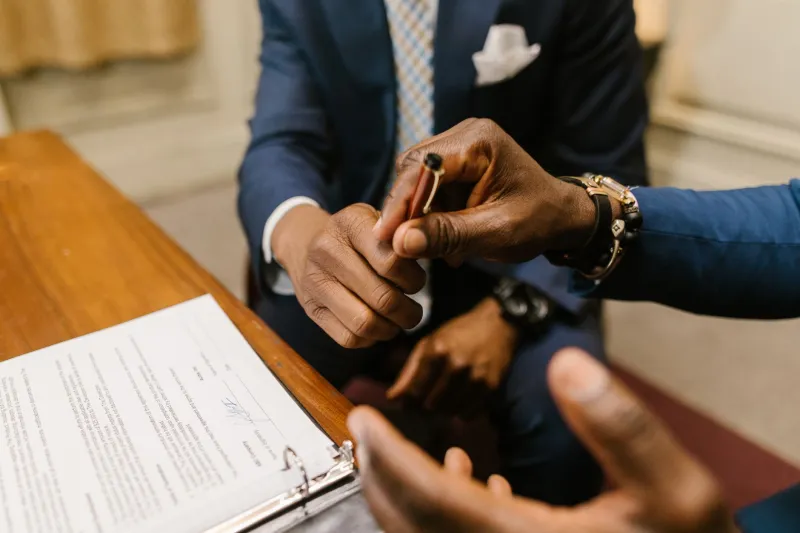
There is a ritual now so familiar it barely registers as remarkable. A president strides into the Oval Office, flanked by staff and cameras, and signs a document that reshapes federal policy without a single floor vote, committee hearing, or recorded dissent from a co-equal branch of government. The stroke of a pen accomplishes what months of Congressional negotiation could not — or, more precisely, what legislators chose not to attempt.
This is the new architecture of American executive power, and it deserves far more scrutiny than it typically receives.
The Historical Drift Toward Unilateral Action
Executive orders are not a modern invention. George Washington issued them. Abraham Lincoln used one to redefine the Civil War's moral stakes. Franklin D. Roosevelt signed Executive Order 9066, authorizing the internment of Japanese Americans — a decision history now regards as one of the most catastrophic abuses of unilateral presidential authority on record.
Yet for much of the twentieth century, executive orders occupied a supplementary role. They implemented existing legislation, managed the federal workforce, or addressed operational necessities that Congress had neither the time nor the inclination to handle through statute. The expectation — imperfect and often violated, but nonetheless operative — was that major policy required Congressional authorization.
That expectation has eroded considerably. Beginning in earnest during the Clinton administration and accelerating through each successive presidency, executive orders have expanded in both scope and ambition. Presidents have used them to restructure immigration enforcement, redirect federal contracting priorities, alter environmental regulations, and reshape healthcare access — each action touching millions of lives without a single binding Congressional vote.
A Bipartisan Habit Neither Side Can Quit
What makes this trend particularly resistant to correction is its thoroughly bipartisan character. Republicans who loudly condemned President Obama's executive actions on immigration found themselves defending similarly sweeping orders under President Trump. Democrats who celebrated Obama's use of executive authority later criticized Trump's deployment of the same mechanism — then fell conspicuously quiet when President Biden reversed Trump's orders through the identical tool.
The pattern reveals something important: the objection to executive overreach is almost never principled. It is almost always positional. When your party controls the White House, the executive order is an instrument of necessary governance. When the opposition holds the pen, it is an assault on constitutional order.
This selective outrage has served, perhaps more than any other single factor, to normalize and entrench the practice. Each administration inherits not only the office but the precedents its predecessors established — and almost invariably expands upon them.
Why Congress Keeps Stepping Aside
Criticism of executive overreach often focuses exclusively on presidents, but that framing is incomplete. Congress bears considerable responsibility for the vacuum it has allowed to form.
Legislative gridlock is not merely a symptom of polarization; it is, in part, a strategic choice. Members of Congress frequently find it advantageous to avoid difficult votes. A controversial policy enacted by executive order allows legislators to publicly criticize an outcome they privately preferred to avoid deciding. They can perform opposition for their constituents without bearing the accountability that a recorded vote would impose.
The result is a tacit arrangement: presidents act unilaterally because they can, and Congress complains without intervening because complaining is costless. The deliberative process the founders designed — messy, slow, and demanding of compromise — gets bypassed by both branches simultaneously, each for its own institutional reasons.
The Veto as Political Theater
The presidential veto operates within a similar dynamic, though its mechanics differ. Where executive orders create policy from the top down, the veto functions as a legislative guillotine — a unilateral termination of the Congressional process that requires a supermajority to override.
In recent decades, vetoes have increasingly served less as genuine policy instruments and more as political positioning tools. A president vetoes a bill knowing full well the override attempt will fail, thereby preserving a campaign narrative, satisfying a donor constituency, or signaling ideological commitment to a base. The legislative outcome is almost incidental to the political calculation.
This is not inherently illegitimate. The veto exists precisely to give the executive a check on Congressional excess. But when it becomes reflexive — deployed not to protect constitutional principles but to manufacture contrast ahead of an election — it contributes to the broader degradation of interbranch negotiation.
What Is Actually Lost
Advocates of expansive executive power make a reasonable argument: in an era of chronic Congressional dysfunction, someone must govern. Legislation that could meaningfully address climate change, immigration reform, or pharmaceutical pricing sits indefinitely in committee while partisan actors prioritize obstruction over outcome. If the president can act where Congress will not, the argument goes, then the public interest is better served by action than by principled paralysis.
This argument deserves engagement rather than dismissal. But it understates what the legislative process, at its functional best, actually produces. Congressional debate — when it occurs in good faith — forces the kind of coalition-building that makes policy durable. Laws passed with genuine bipartisan support tend to survive changes in administration. Executive orders do not. Every policy enacted by presidential decree can be rescinded by the next president on their first day in office, as Americans have witnessed with increasing frequency.
The result is governance that oscillates rather than advances. Policy swings dramatically with each election cycle, denying individuals, businesses, and institutions the stable regulatory environment they need to plan effectively. The shortcut, it turns out, does not actually save time. It simply defers the reckoning.
The Democratic Stakes
At PolitArena, the core conviction is that democracy functions best when ideas compete openly, when opposing arguments are tested against one another in public forums, and when the resulting decisions carry the legitimacy that only genuine deliberation can confer. Executive governance, by its nature, forecloses that competition.
When a president governs by order rather than by legislation, there is no committee markup where affected communities can testify, no floor amendment process where dissenting perspectives can shape the final product, and no recorded vote that holds individual legislators accountable to their constituents. The policy may be sound or unsound, but the process that produced it offers no mechanism for the public to meaningfully participate.
That is not a small thing to surrender in exchange for administrative efficiency.
Toward a Reckoning
Reforming this dynamic will require something neither party has demonstrated much appetite for: a willingness to constrain its own power when it holds the advantage. Congress could reclaim authority through stronger use of the Congressional Review Act, clearer statutory limits on executive discretion, and — most critically — a renewed commitment to actually legislating on contentious issues rather than outsourcing difficult choices to the White House.
Presidents, for their part, could choose to pursue legislative solutions even when executive action is available, accepting slower outcomes in exchange for more durable ones.
Neither of these changes is likely in the near term. But the conversation about whether America wants to be governed by legislation or by decree is one that citizens — and the forums where they engage — have every reason to sustain. The arena of democratic debate does not close simply because one branch of government has found a way to work around it.