Who's Really Paying for That Bill? A Guide to the Hidden Funding Networks Shaping U.S. Policy in 2024
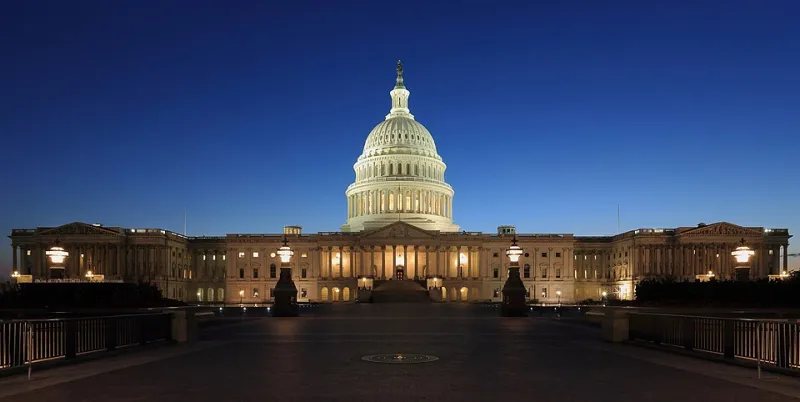
Photo: Martin Falbisoner, CC BY-SA 3.0, via Wikimedia Commons
When a bill moves through Congress, the public debate focuses on the text: the provisions, the projections, the political arguments for and against. What receives far less scrutiny is the financial architecture surrounding that bill — the constellation of donors, lobbying organizations, trade associations, and nonprofit intermediaries whose resources determine whether legislation gains traction or dies in committee.
In 2024, as voters prepared to weigh in on one of the most consequential electoral cycles in recent memory, the question of who funds which policy ideas became more urgent — and more difficult to answer — than ever. This is PolitArena's attempt to follow the money across the political spectrum and ask what it tells us about the competition of ideas in American governance.
The Infrastructure of Influence: How Policy Funding Actually Works
To understand who finances policy, it helps to understand the vehicles through which that financing flows. The post-Citizens United landscape has produced a layered system that obscures direct attribution at nearly every level.
Super PACs can raise and spend unlimited funds but must disclose their donors to the Federal Election Commission. 501(c)(4) "social welfare" organizations, by contrast, can engage in political activity without disclosing their donors at all — a category that gave rise to the term "dark money." Trade associations operate similarly, pooling industry contributions and directing them toward lobbying and issue advocacy without itemized public disclosure.
The result, as documented by researchers at OpenSecrets and the Brennan Center for Justice, is a system in which the ultimate source of policy funding is frequently several layers removed from any publicly visible expenditure. A corporation donates to a trade association, which funds a 501(c)(4), which underwrites a policy advocacy campaign, which shapes the legislative priorities of sympathetic members of Congress. Each step is legal. The full picture is rarely visible.
Energy Policy: Fossil Fuel Interests vs. Climate Advocacy
Few policy arenas better illustrate the funding dynamics of contemporary American politics than energy legislation. In the 2023-2024 cycle, OpenSecrets data showed that oil, gas, and coal interests contributed more than $50 million to federal candidates and parties, with the overwhelming majority directed toward Republican recipients. Industry-aligned organizations including the American Petroleum Institute spent tens of millions more on issue advertising opposing regulations associated with the Inflation Reduction Act.
On the other side of the ledger, climate advocacy organizations — many of them funded by a relatively small network of major liberal philanthropists including the Bezos Earth Fund and Bloomberg Philanthropies — channeled hundreds of millions of dollars into both electoral and policy campaigns supporting clean energy transition legislation.
What the funding maps reveal is not simply partisan alignment but a specific theory of governance on each side: one prioritizing energy sector stability and domestic production, the other prioritizing long-term climate risk mitigation. Both represent genuine value choices. Both are substantially underwritten by interests with financial stakes in the outcome.
Healthcare: The Pharmaceutical Industry's Bipartisan Reach
If energy funding follows a relatively clean partisan divide, pharmaceutical policy funding does not. The pharmaceutical and health products industry spent more than $370 million on lobbying in 2023 alone — a figure that represents the single largest lobbying expenditure of any industry sector, according to OpenSecrets.
Critically, that spending flows across party lines with notable consistency. While Democratic candidates have more frequently advanced drug pricing reform — including the prescription drug negotiation provisions of the Inflation Reduction Act — PhRMA and its member companies have maintained substantial relationships with members of both parties, particularly those serving on the Senate Finance and House Energy and Commerce committees, which hold jurisdiction over healthcare legislation.
The practical effect is visible in the legislative record. The drug pricing provisions that ultimately passed in 2022 were significantly narrower than the versions initially proposed, a narrowing that advocates attributed in part to sustained industry lobbying pressure on members of both parties.
For voters attempting to evaluate healthcare policy on its merits, the funding landscape is a reminder that the distance between a bill's stated purpose and its final form is frequently measured in lobbying dollars.
Education Policy: The School Choice Funding Network
The school choice movement represents one of the most sophisticated examples of sustained, long-term policy funding in contemporary American politics. Organizations including the American Federation for Children — whose founders include members of the DeVos family — have spent decades building a network of state-level advocacy organizations, model legislation clearinghouses, and donor networks designed to advance voucher and education savings account programs.
That infrastructure has produced tangible legislative results: in 2023 and 2024, a record number of states enacted or expanded school choice programs. Critics of these programs, including teachers' unions — themselves major donors to Democratic candidates and causes — argue that the funding networks behind school choice represent a coordinated effort to redirect public education dollars toward private and religious institutions.
Both sides of this debate are backed by significant financial interests with direct stakes in the policy outcome. The teachers' unions represent workers whose employment depends on public school funding levels. The school choice advocacy network includes both ideological libertarians and private education entrepreneurs. Understanding those interests does not resolve the underlying policy question — but it does provide essential context for evaluating the arguments each side advances.
What the Money Tells Us
Following the funding behind major policy initiatives does not lead to a simple conclusion. It does not reveal that one party is more corrupt than the other, or that every funded policy position is inherently illegitimate. What it reveals is something more nuanced and more important: that the competition of ideas in American democracy is not a level playing field.
Some ideas receive enormous financial amplification. Others, however compelling their underlying logic, struggle to gain traction without institutional backing. Understanding that asymmetry is not cynicism — it is political literacy.
At PolitArena, we hold that informed citizens are better equipped to evaluate policy arguments when they understand who is making those arguments and why. Following the money is not the end of political analysis. It is, increasingly, the beginning.
Resources for tracking political funding: